
How I photograph cars
21 Jul 2026I get to race events, car shows, museums and informal meets very often. This year has been a slower one for my car photography, but I’ve still been to the Pagani factory, the Ferrari museum, Lydden Hill, Fiorano, and maybe ten trips to Caffeine & Machine. I photograph a lot of cars. I like to get a big range! The British Truck Racing Championship brings out the big rigs, and the soapbox race every Easter at Lydden dishes up some coffin sized constructions. When you’re shooting at the track you always have to be thinking about the weather and the light, especially here in England. You need a portable bag of toys that can cover plenty of scenarios. Here’s what works for me.
The paddock
The paddock is one of the best places to take photos. You can get right up to the cars, depending on the event, and you can see the human side of it as drivers and mechanics try to find solutions to problems against the clock. At the start of the weekend the cars are all freshly wrapped or painted, polished and gleaming, as pristine as racing cars get. I always think they look like opening a new tin of Quality Street. That’s a great time to get close. Then at the end, when they’re scarred and dirty, beaten up and splattered with oil, that’s exciting too!
For these shots I want an ultrawide lens on a mirrorless body, currently the Fujifilm X-S20 with the Viltrox 13mm f/1.4 STM, a CPL filter on the front, and my secret weapon: roofers’ kneepads. Get on your knees and find those angles, twist the filter to kill nasty reflections, and get right up close so you can draw out the detail, the shapes and the excitement.
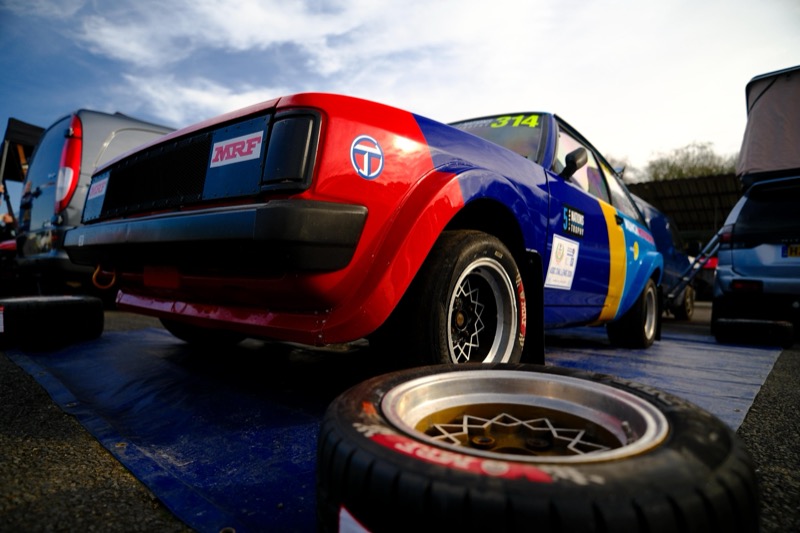 Down low, wide, right in it.
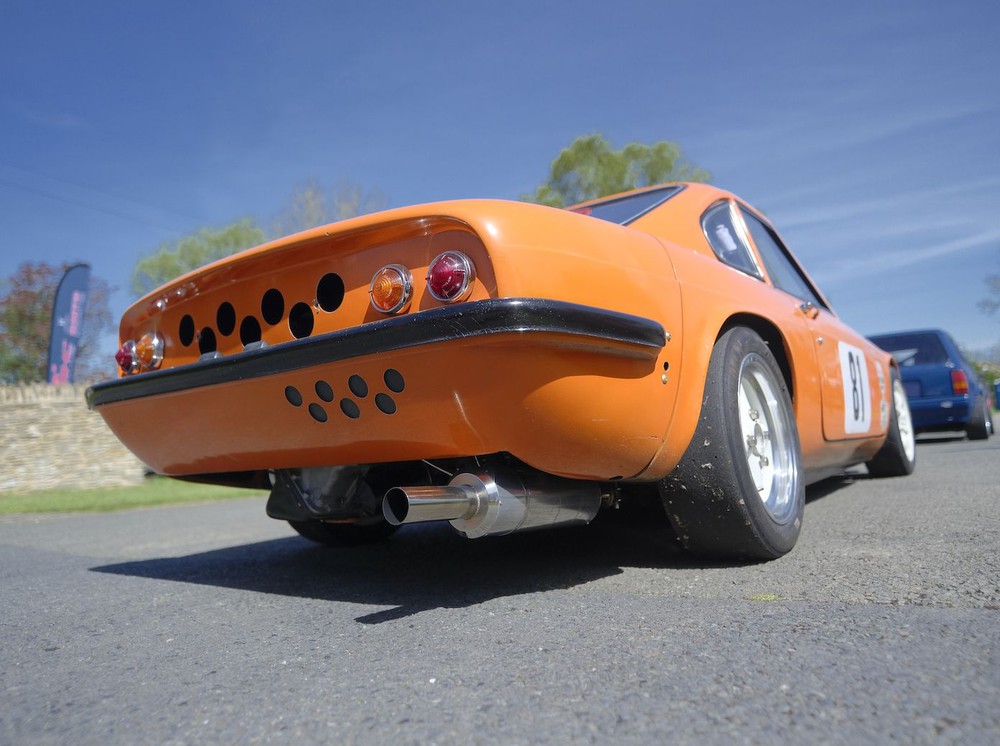 A CPL killing the reflections from the flat panels.
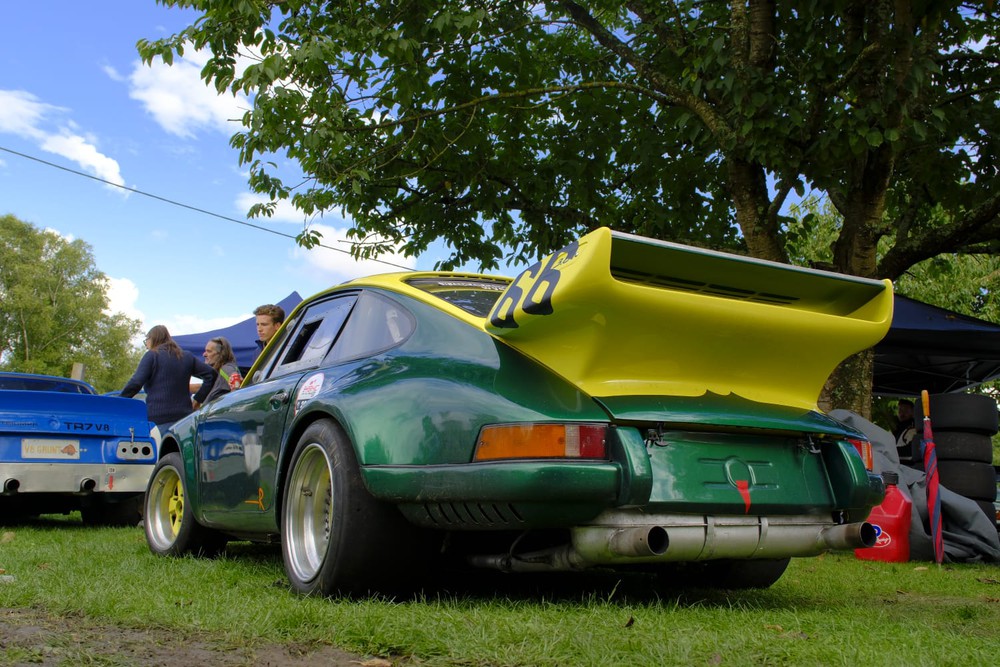 Close and low in the paddock.
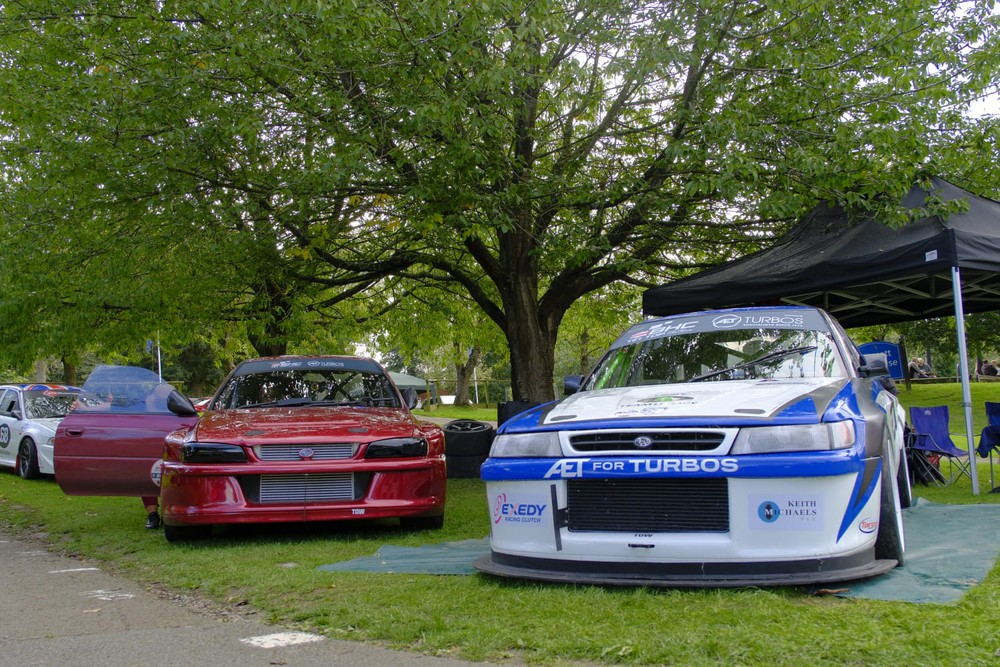 Get low and let them line up.
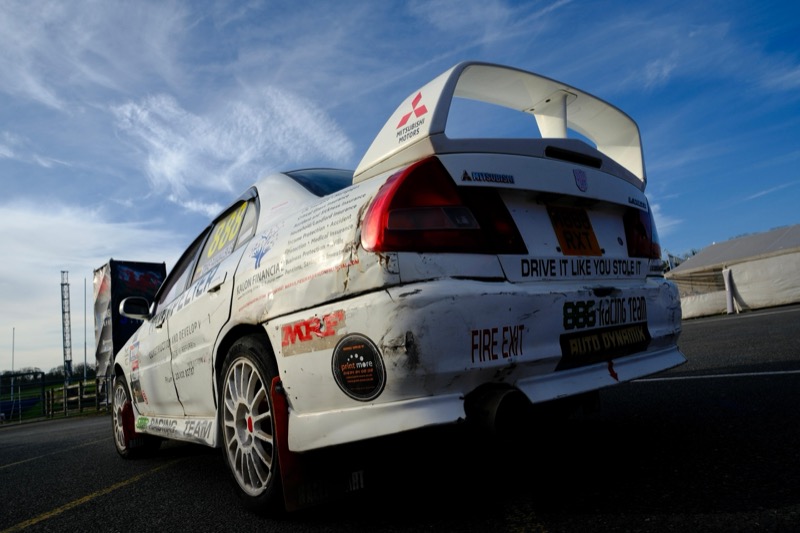 The other end of the weekend: scarred, dirty, done.
On the street
The same technique works away from the track. Spot a good car parked up, get down low, twist out the reflections and work the light. You can get near enough with a phone, too, if you’re prepared.
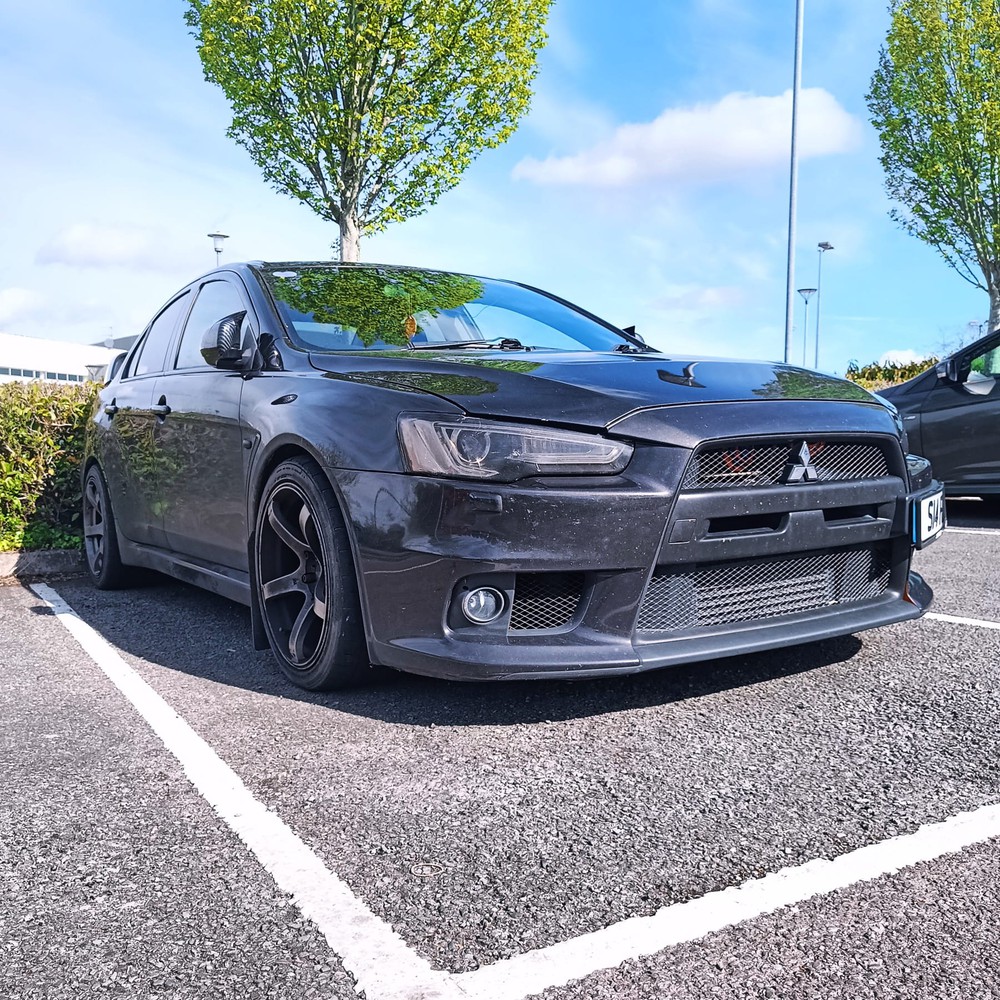 No CPL this time, so the reflections were a fight. Still a great looking car.
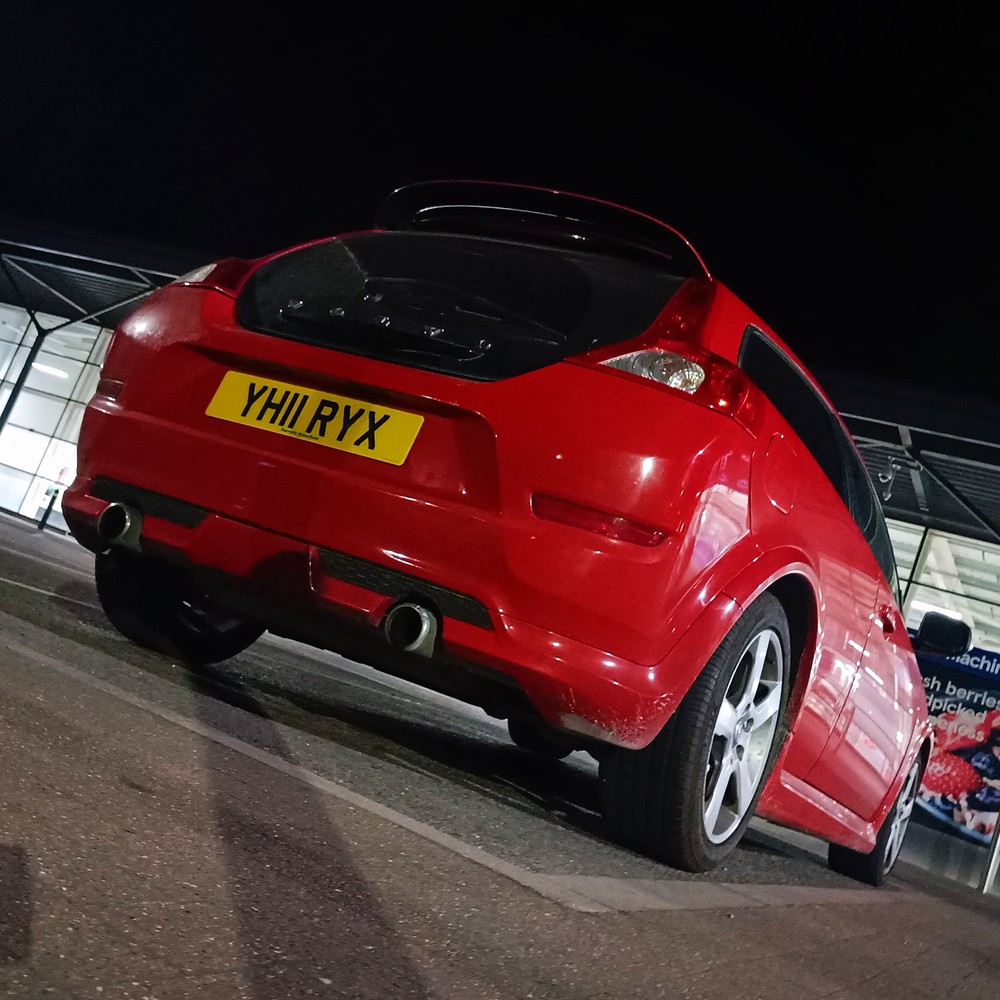 Down low again. A phone will do it.
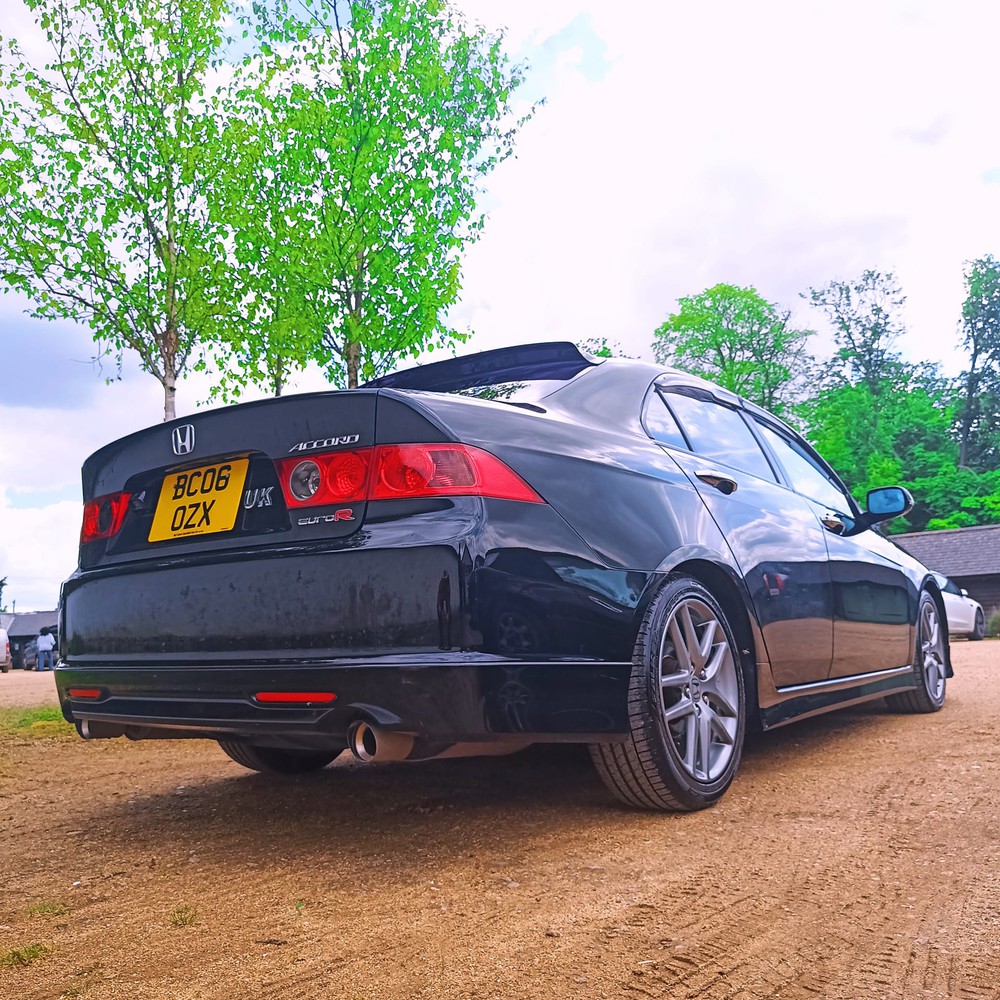 The Accord Type R, on the phone, down low.
Common mistakes
The mistakes I see people make in the paddock: being shy about getting close, and shooting at eye level. That’s how you end up with flat, unexciting scenes. The teams don’t want you getting in the way or run over, but they’re happy for you to snap the cars, that’s what the sponsors pay for. Get in there, and get up high or down low to find a different point of view.
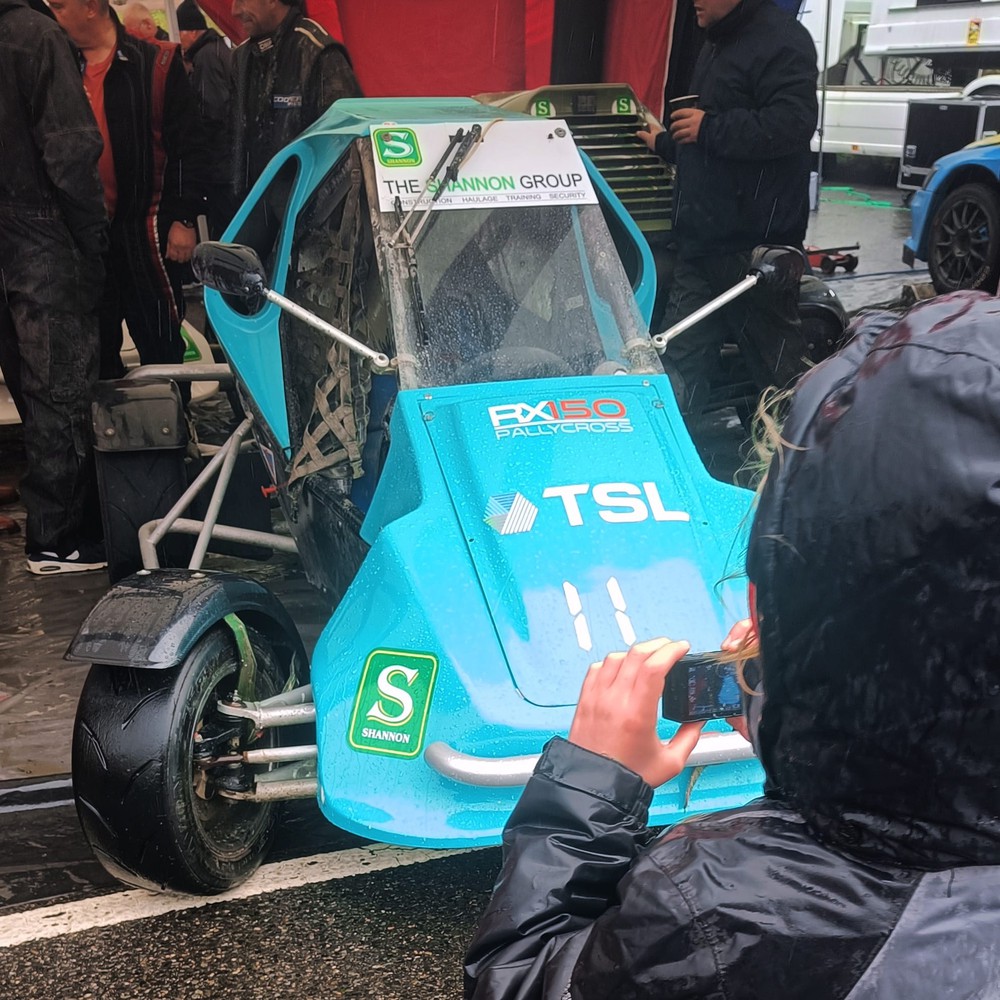 Eye level, no angle. The wrong shot.
Action is a different deal
Action is a different deal entirely. In the paddock you can frame a shot, dither, contemplate. At trackside, you think and the shot is gone. You need to be prepared, and then you need to press that button!
I see people trackside with the latest and greatest Sony mirrorless, holding down the button and filling up a CF card every few laps. What’s the point? You don’t need all the fps in the world, and you don’t need to record every moment, because these races are mostly already being filmed for the television. You should be looking to create art out of the moment, not store a complete record of the event.
No question about it, my favourite camera for trackside is the Nikon D3300. It gets the Nikon 70-300mm f/4.5-6.3 DX VR AF-P lens for this job, because it’s the fastest focusing telephoto zoom for APS-C, and of course I keep a CPL on the front. I’ve tried all sorts at the track but I always come back to the D3300 for on-track action. The light weight and no-nonsense nature of it is so important.
On the D3300 I use basically two settings. Aperture priority, set to the brightest/widest/fastest/whatever (the language around aperture is always so muddled), for freeze-frame moments. That’ll be a crest or a jump, a key moment you need to freeze precisely, where you also know exactly where you’ll grab that focus.
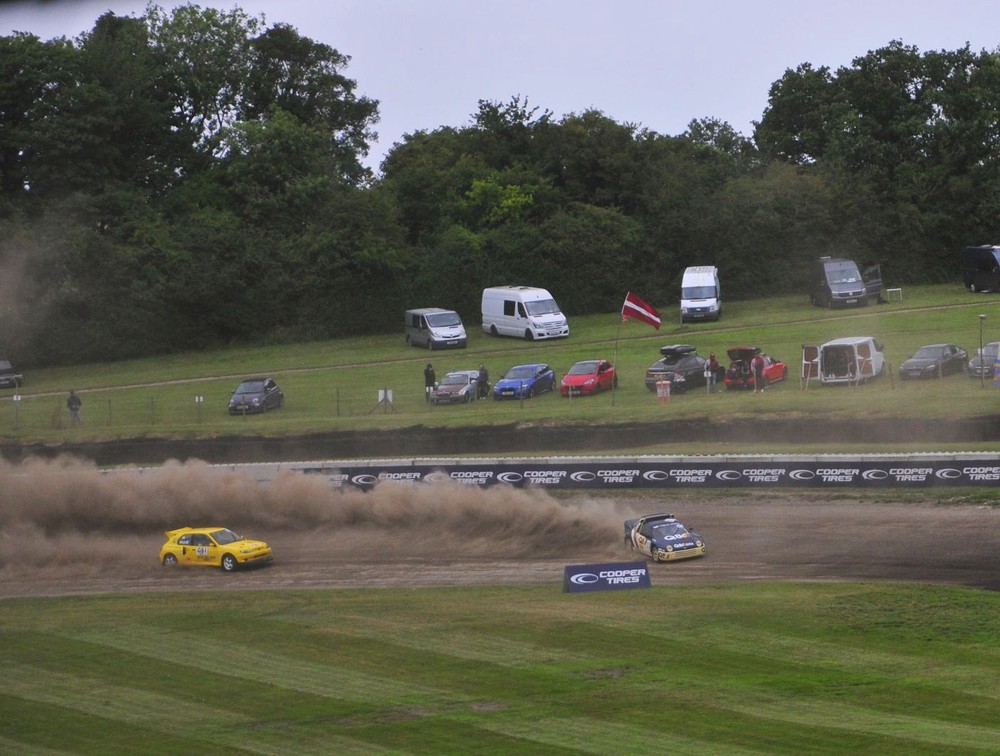 Aperture priority, frozen.
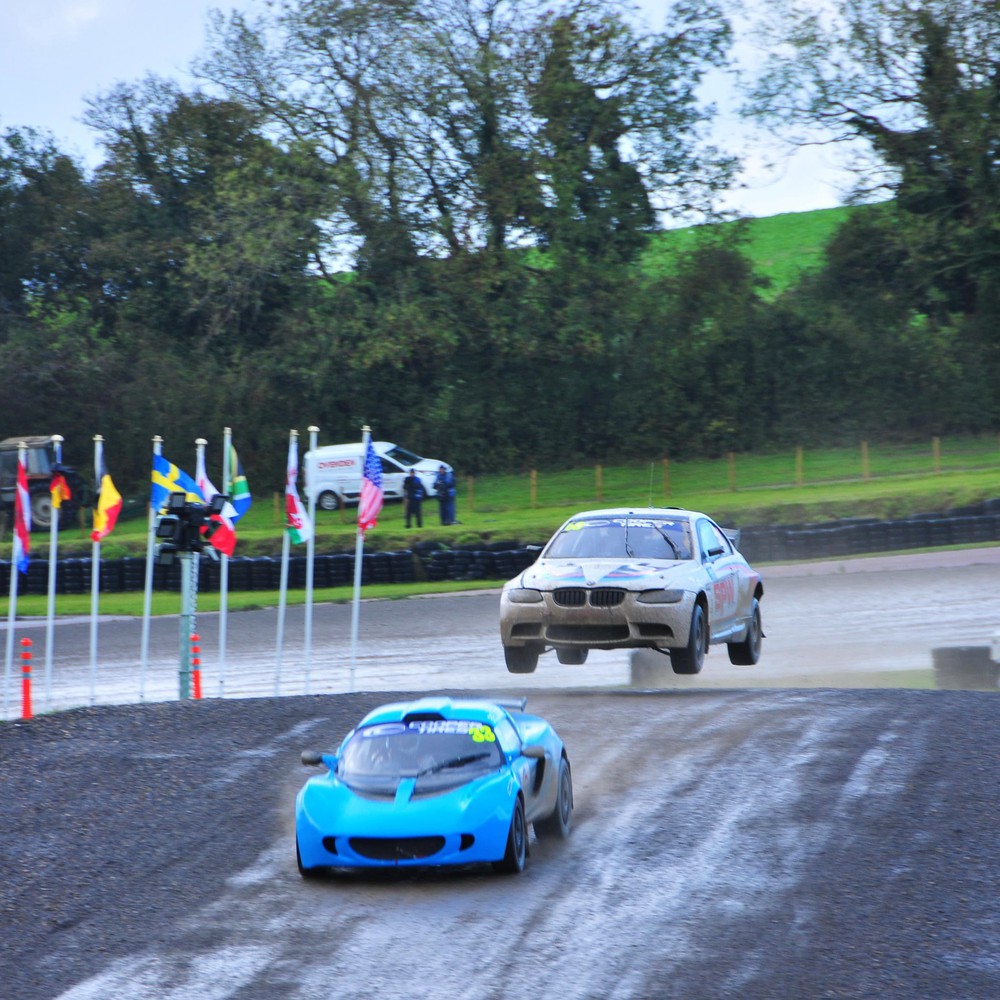 A launch, frozen sharp.
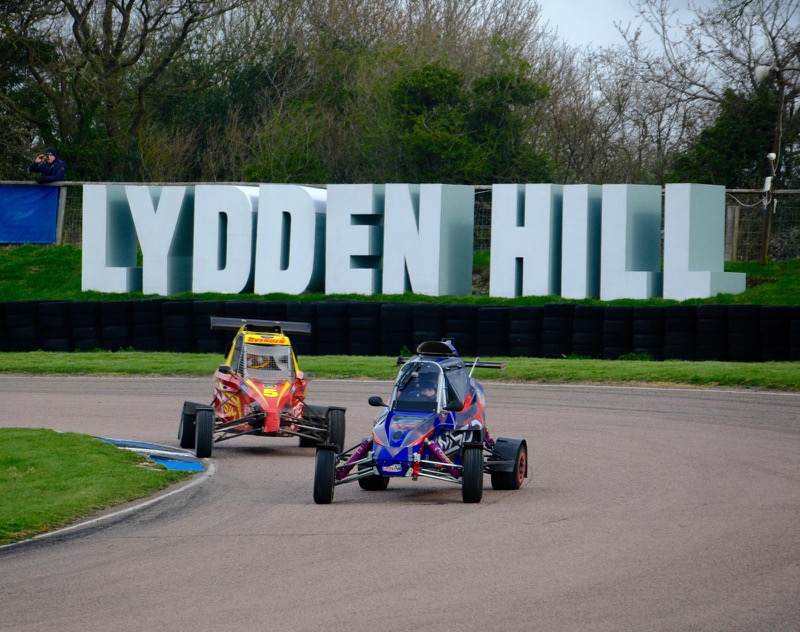 Frozen on the hill, aperture priority.
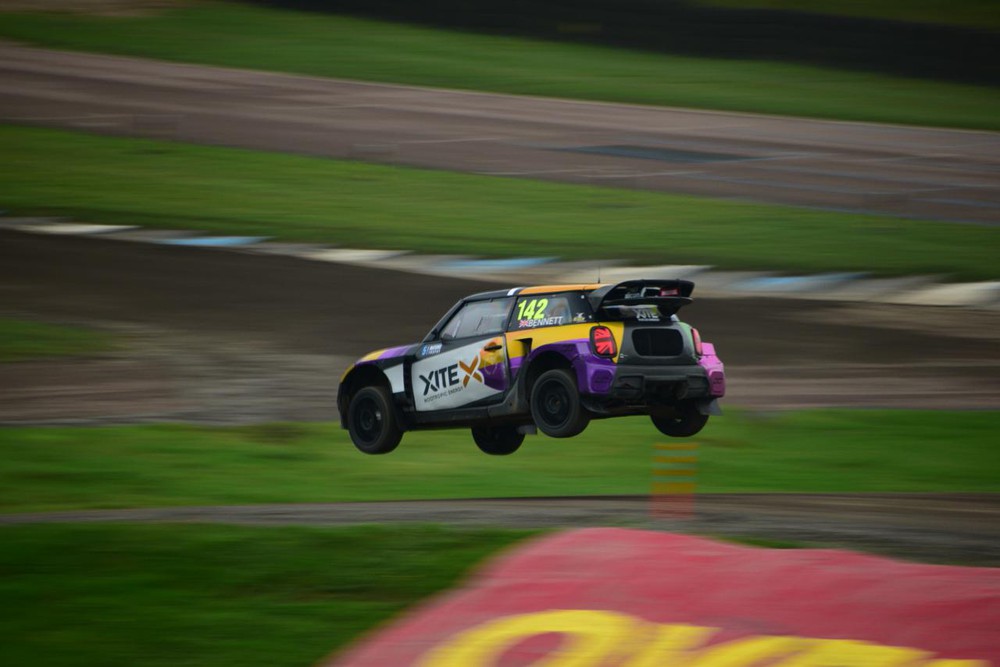 A pan, but much faster than I’d usually go.
The more important setting is shutter priority, which I’ll adjust through the day as I move from corner to corner. The purpose here is to pan with the cars and keep them still as the track seems to move around them. Why do you do this? When you watch a race, your eyes follow the cars. You don’t defocus and keep your eyes stationary as the racers zip past. Keeping the track still and blurring out the cars is a rookie mistake when shooting action.
It’s simple. Choose a point on the car and set the focus to single point. Put that focus point on your chosen spot, the nearest headlight, or on a single seater the car number or the helmet. Move with the car and gradually extend the shutter time as you get the hang of it. You’ll find a sweet spot where you can follow the car well but the track doesn’t become completely distorted and unrecognisable.
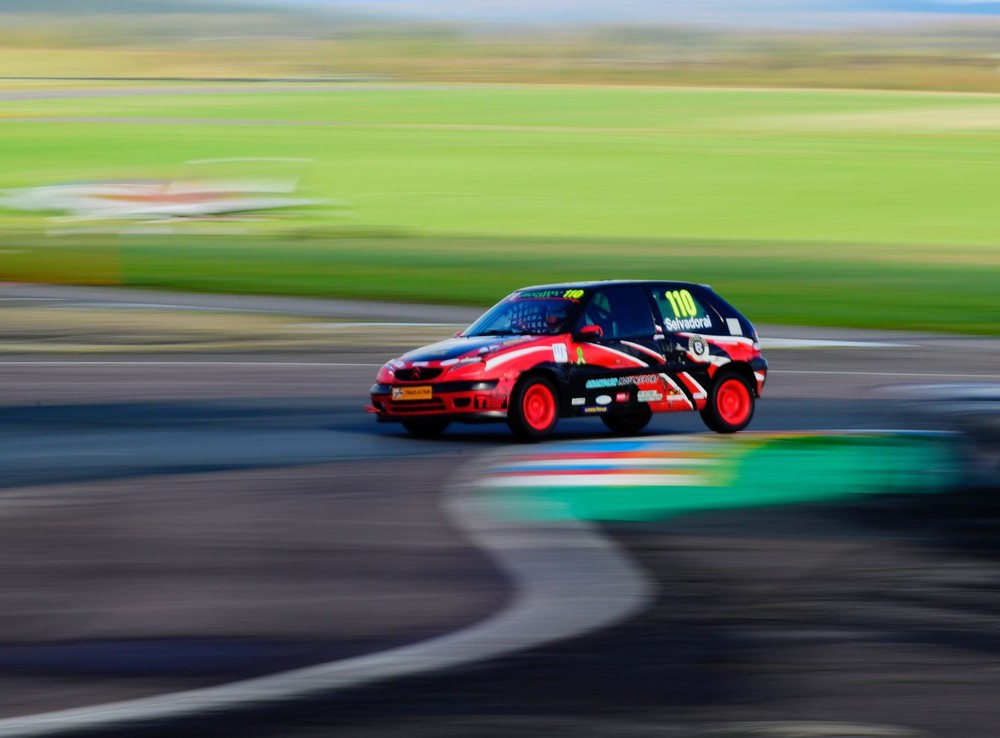 Shutter priority, panning.
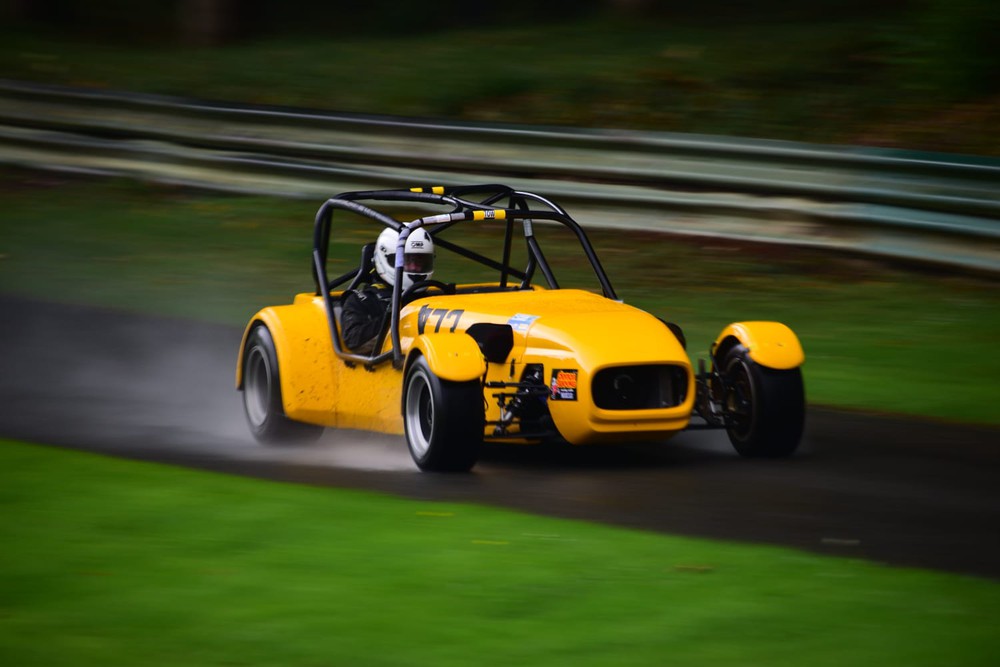 Panning at Prescott.
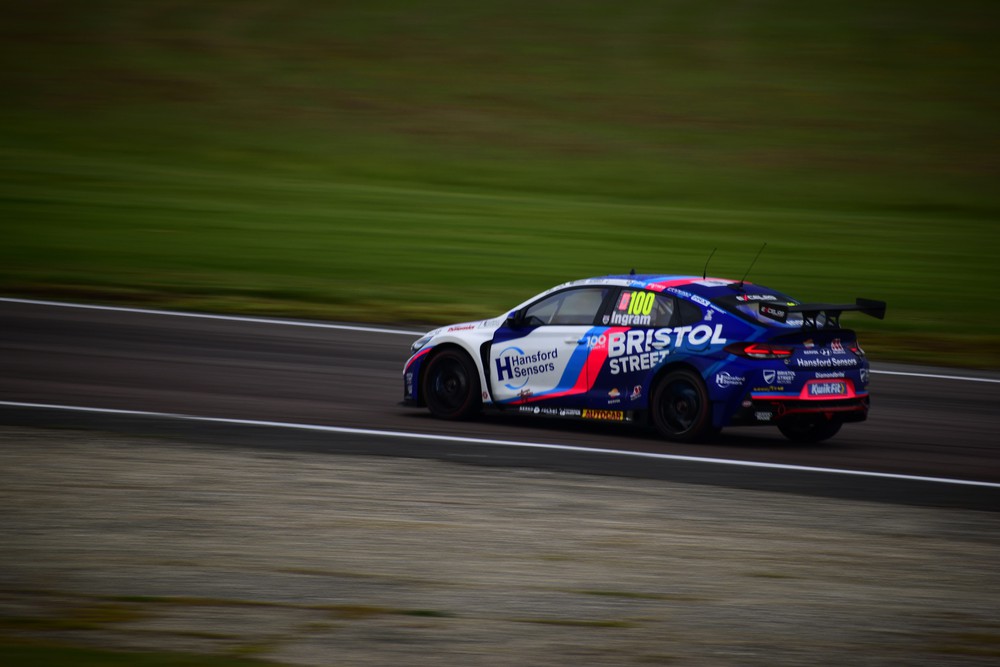 Panned, with the CPL working too.
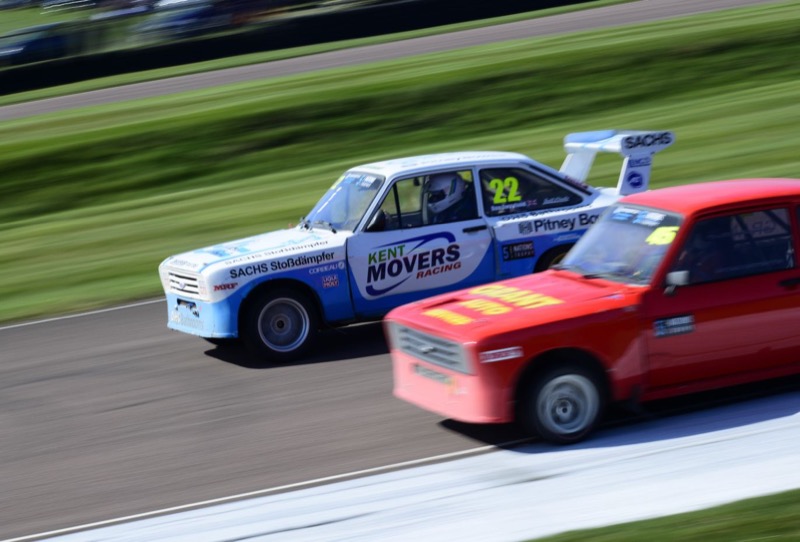 Pan with the car, let the track move.
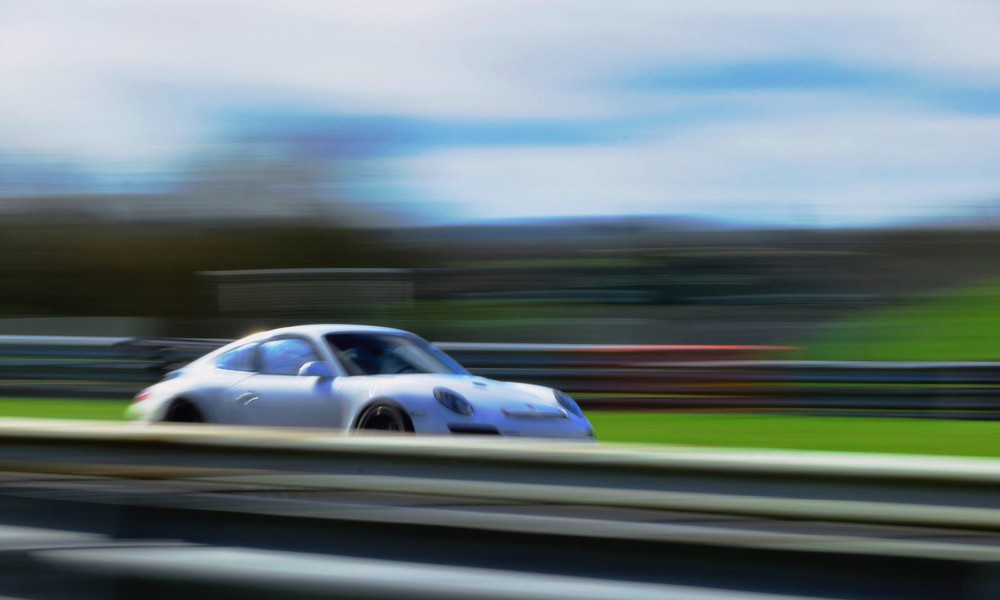 Following the car through.
Work with the light
If there’s a heavy shadow the cars dip into and pop out of, that’s a great place to snap at the brightest time of day. If there are very exposed spots, shoot those at the start and end of the day. You don’t want to shoot directly into the sun, and you don’t want the sun directly behind you either, because it makes everything flat and dull. Get yourself at a good angle to the light so you can use the shadows to give things depth, bring out the shapes, and make the cars look super close to each other.
Here are two cars parked next to each other in the same pit lane. The sky changed and the light moved between the two photos. One is exciting and the other is dull.
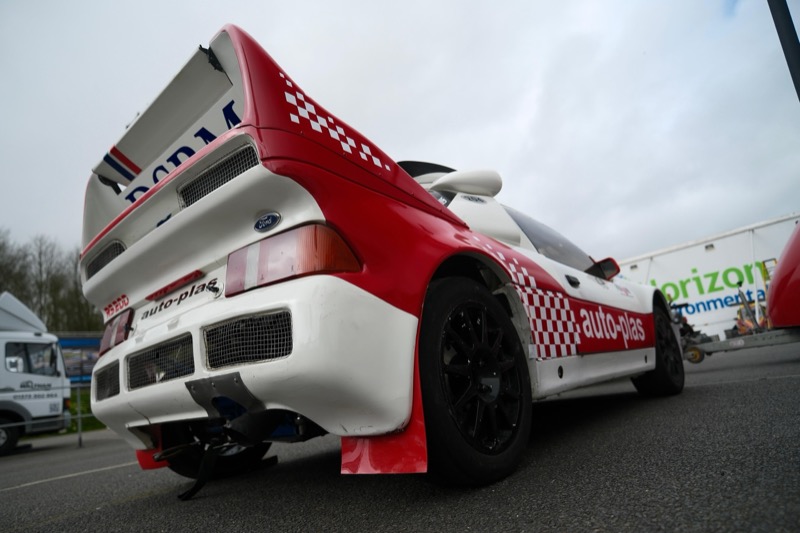 Flat white sky, and the car falls dead.
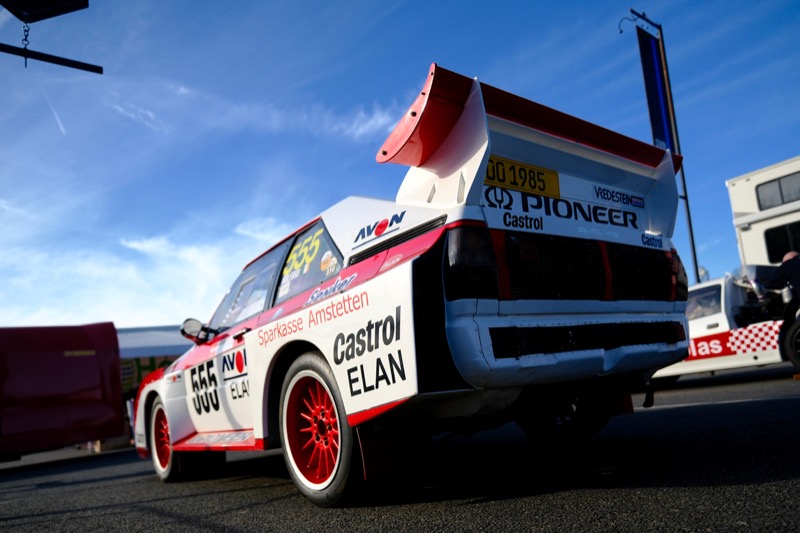 Same pit lane, the sun out, and it comes alive.
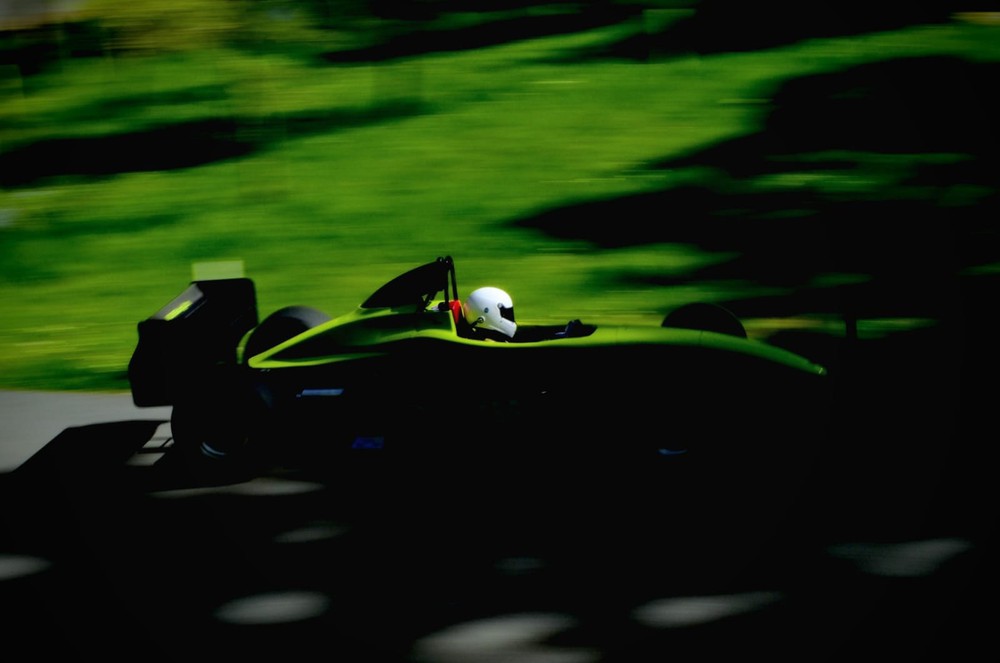 Prescott, light doing all the work.
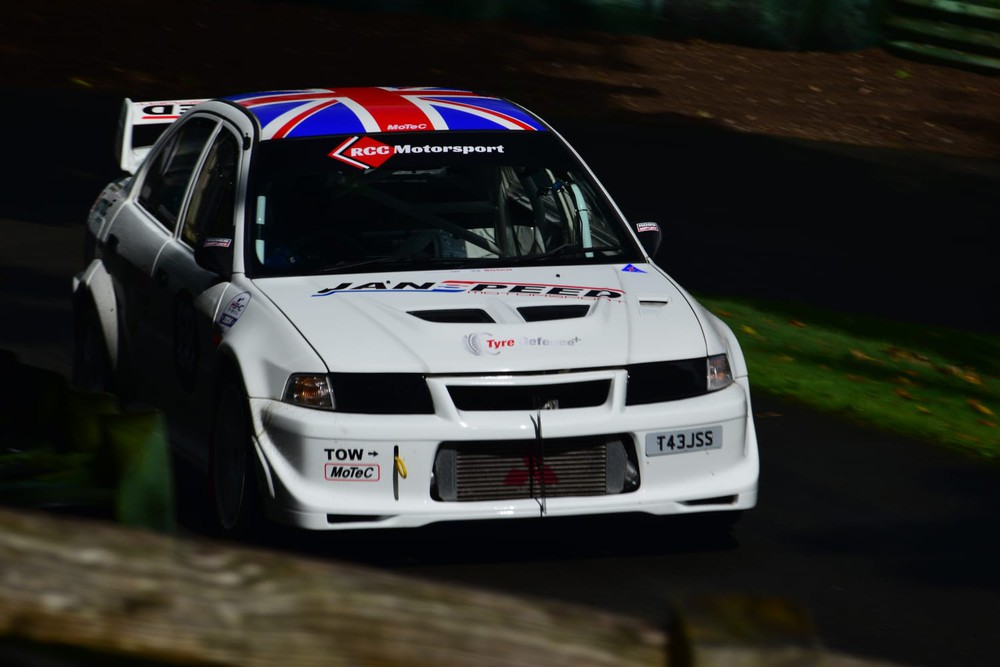 The same light, put to use. The shadow emphasises the Evo bodywork.
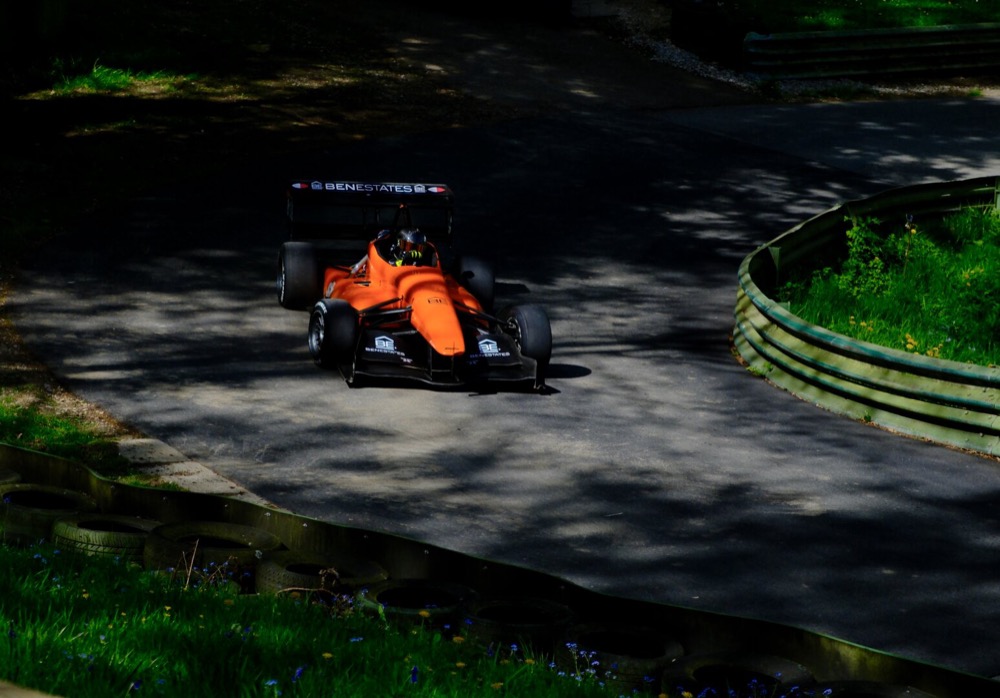 The same corner again, the car sitting in a pool of light through the trees.
It doesn’t always go your way. This is one of my favourite photos, but the light here is poor and nearly kills it. It makes the scene so flat, and I’ve let the shutter run slightly too long. The shot is made by the extreme contrast of the yellow and black parts of the car. I shot this from the back door of the infield clubhouse at Thruxton.
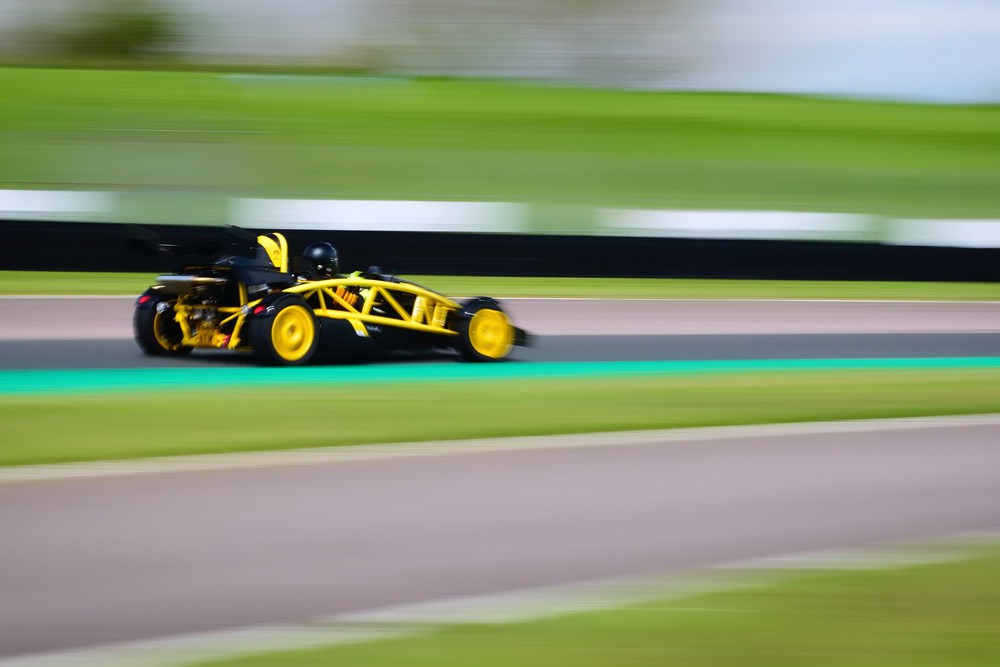 Flat light, shutter held too long, saved by the yellow and black.
If you’re feeling bold
And if you want to be really bold, take a film camera to the track! Be prepared for a lot of duds, though. Not for the faint-hearted or the budget shooter.
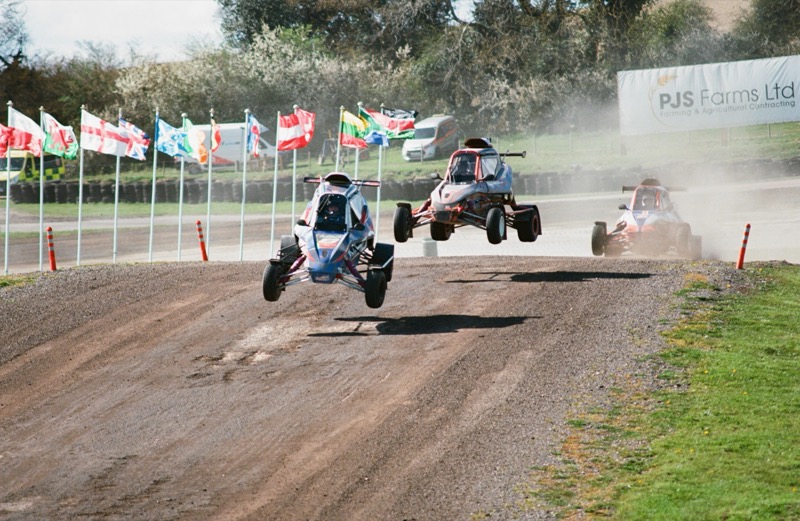 Film, at the track. When it works.
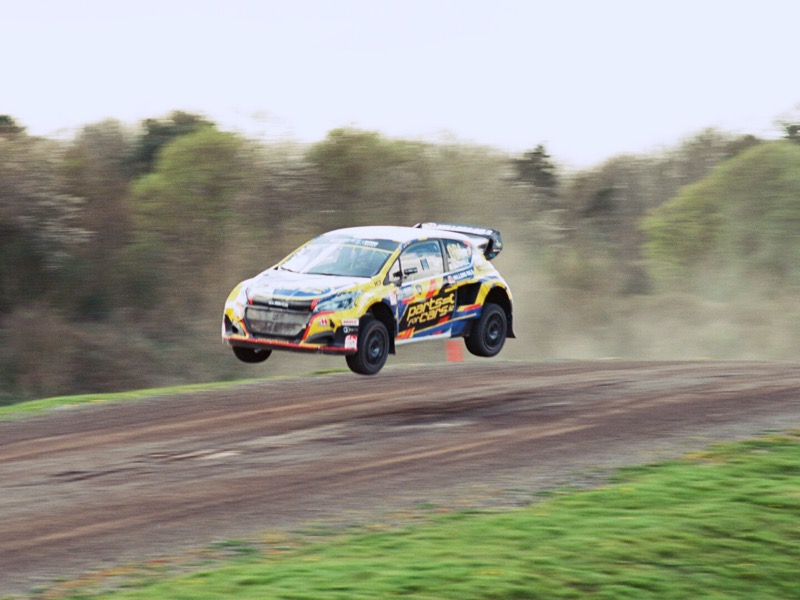 Film again.
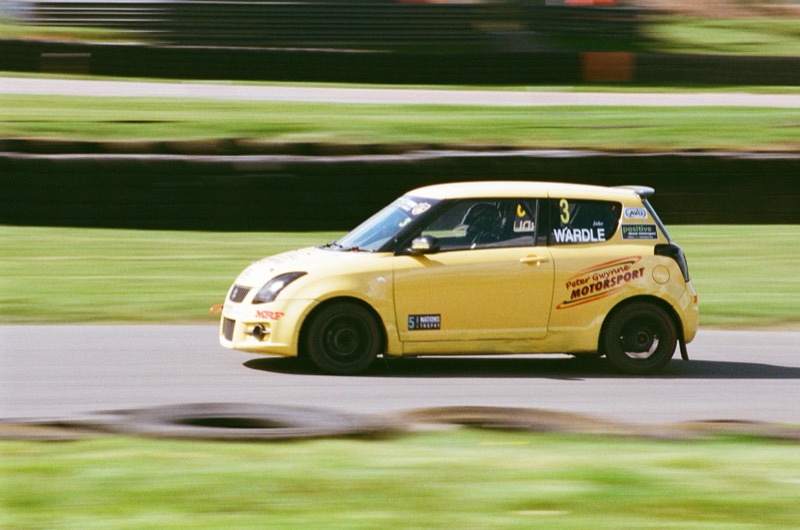 Worth the duds.
The rest of the car photos and writing live on the wheels page.